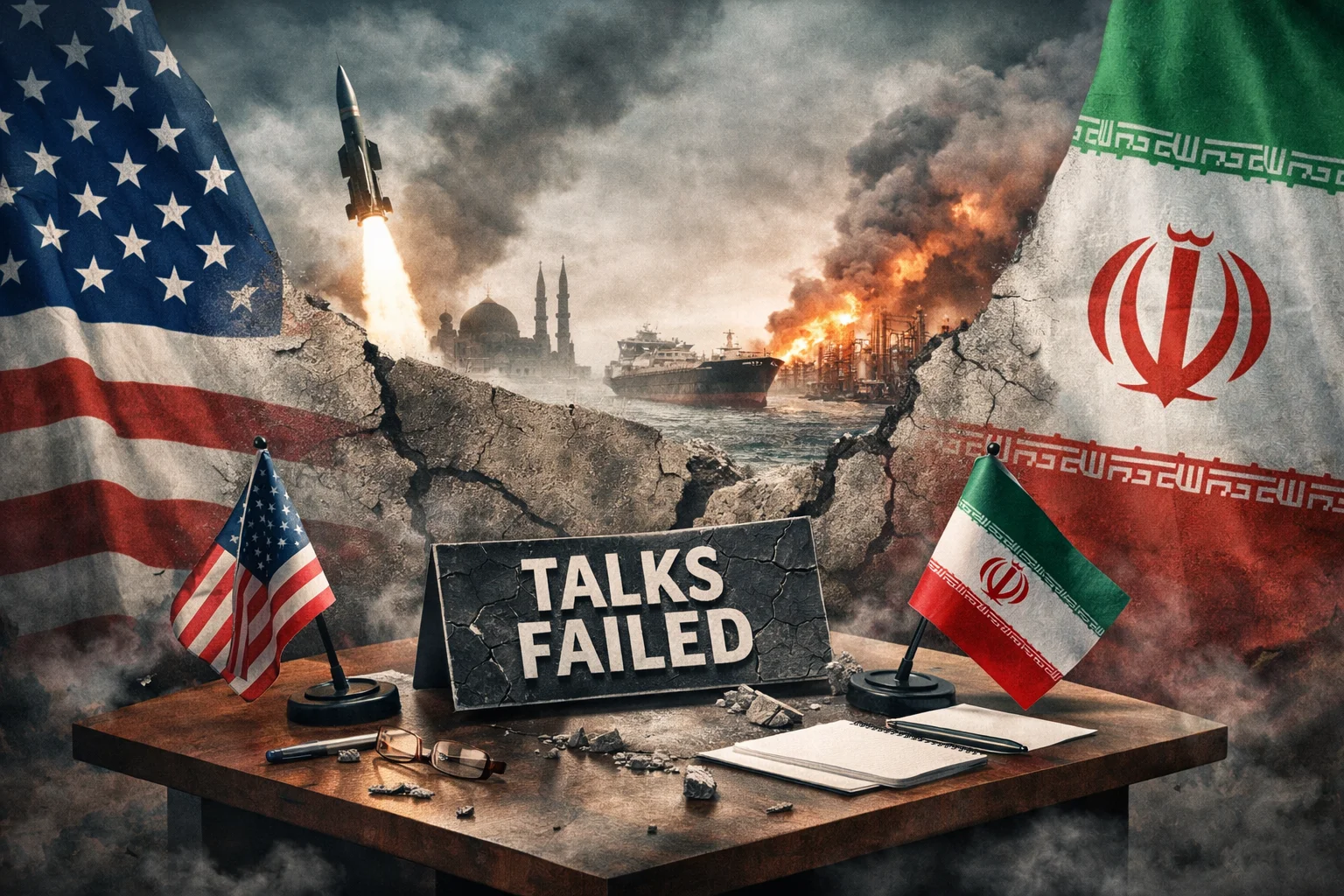
US–Iran Talks Collapse 2026 – Key Reasons, Global Impact, Political Analysis
US–Iran talks collapsed after marathon negotiations, with both sides accusing each other of excessive demands and unlawful requests. Read full political analysis, global impact, and future implications.
US Iran talks collapse 2026, excessive demands unlawful requests Iran US, political news Middle East 2026, Iran nuclear issue news, Strait of Hormuz crisis, global political tensions
High-stakes diplomatic negotiations between the United States and Iran ended without agreement after nearly 21 hours of intense discussions in Islamabad. The talks, aimed at stabilizing the ongoing Middle East crisis and ensuring long-term peace, collapsed amid strong disagreements over nuclear policies, regional security, and economic sanctions.
Iran accused the United States of making “excessive demands and unlawful requests,” while Washington stated that Tehran failed to provide sufficient assurances regarding its nuclear program and regional activities.
The breakdown of talks has raised concerns globally, particularly regarding energy markets, regional stability, and future diplomatic relations.
Background of the US–Iran Negotiations
The negotiations were part of broader diplomatic efforts to reduce tensions linked to the 2026 Middle East conflict and ensure the safe movement of global oil supplies through the strategic Strait of Hormuz.
The Islamabad talks represented one of the most significant diplomatic engagements between the two countries in recent years, with mediators attempting to bridge differences on key geopolitical issues.
Experts believe the discussions were critical for preventing further escalation and maintaining fragile ceasefire conditions.
1. Nuclear Program Disagreement
One of the major sticking points was Iran’s nuclear program. The United States demanded strict limitations and assurances that nuclear activities would remain peaceful, while Iran insisted on maintaining its sovereign rights to nuclear development for civilian purposes.
2. Disputes Over Strait of Hormuz Control
The Strait of Hormuz plays a crucial role in global oil transportation. Disagreements over control, navigation security, and economic conditions related to the strait contributed significantly to the diplomatic deadlock.
3. Sanctions and Economic Restrictions
Iran demanded easing of economic sanctions, arguing that restrictions negatively impact its economy and citizens. The United States insisted on compliance with international regulations before any sanctions relief could be considered.
4. Political and Strategic Interests
Both countries maintained firm positions regarding regional influence and national security priorities. Analysts suggest that lack of mutual trust and conflicting geopolitical goals prevented compromise.
Iran’s foreign ministry emphasized that successful negotiations require recognition of national interests and avoidance of unrealistic demands.
Global Impact of the Failed Negotiations
The collapse of negotiations has increased uncertainty in global financial markets, particularly affecting oil prices and energy supply chains. Analysts warn that prolonged tensions could disrupt international trade and increase economic volatility worldwide.
Market experts believe geopolitical instability may lead to higher fuel prices and inflation pressure across several countries.
Political Reactions and International Response
Global leaders have called for continued diplomatic dialogue to prevent escalation. Some countries have urged both parties to return to negotiations and maintain peaceful communication channels.
Political observers believe future discussions may still take place, as both nations have indicated willingness to pursue diplomatic solutions despite current disagreements.
Expert Analysis
Political analysts suggest that long-standing mistrust, combined with complex regional conflicts, has made negotiations highly challenging. Diplomatic experts emphasize that successful agreements require compromise, transparency, and long-term strategic cooperation.
The situation remains dynamic, and further developments may influence international relations and economic stability.
Conclusion
The collapse of US–Iran talks highlights the complexity of global diplomacy and the challenges involved in resolving geopolitical conflicts. As tensions continue, the international community remains focused on preventing further escalation and promoting peaceful dialogue.
Observers suggest that future negotiations may require greater flexibility and confidence-building measures from both sides.